A third or more of the people who register a Wainwrights completion finish on the same fell, on the same day, as someone else. In the LDWA Hillwalkers' Register, 296 of the 911 entries that give a last summit and a full date (32%) share both with at least one other completer. Most are pairs: 121 of them. There are also 7 groups of three, 2 of four, one group of 7 and one of 18. On the Wainwright Society's larger register, which we counted on 22 September 2026, the share is higher still: 696 of the 1,620 entries with a full date (43%).
The real share is probably higher. Each register only counts people who each sent in their own claim, so a couple where only one person registered doesn't show up. A lot of rounds are walked by two people, or by a family, a club or a person and a dog.
Couples and families
On the register, a joint finish shows up as two names with the same fell and the same date. The earliest go back to the 1970s.
What helps:
- Agree early that it is a joint round. If one of you slips off for a solo day on the Coledale fells, the rounds split, and one of you ends up going back to fells you've already done.
- Keep one shared record, with dates for both of you. Both registers take one claim per person, and the Wainwright Society asks each of you for your first and last fells with dates.
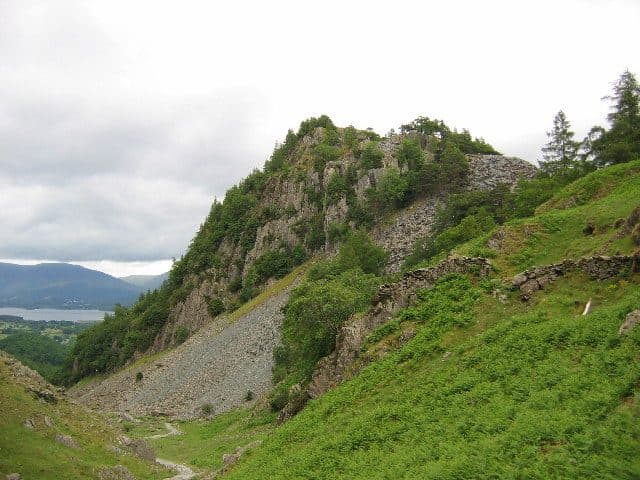
- Choose a last fell that suits everyone. Castle Crag, the lowest Wainwright at 290 metres, is the most popular finish on the LDWA register, with 45 of 955 completers, and third on the Wainwright Society's, with 66. Binsey, Gowbarrow Fell and Latrigg are other short finishes where family and friends can be on the top. See where people finish the Wainwrights.
Short finishing fells the whole party can reach
With children, the low fells come first and the list waits. The easiest Wainwrights has short days that suit young legs. A round has no deadline, so there is no rush to move on to the big days.
Walking clubs
A club is an easy way to get fells done if you don't drive or don't want to plan every walk. Most publish a programme well ahead, with a date, a meeting point and a leader, and you turn up. Ramblers groups around the Lakes and in the towns near them work the same way.
The Wainwright Society runs its own programme of walks for members, and its 2022 programme had eight walks. Its bigger events have drawn around 70 members. They go at the group's pace, and they are a sociable way to pick up a fell you've been putting off.
The catch with club walking is that the route isn't yours. A club day on the Helvellyn range might take in five fells you've already done and skip the one you need. Keep a list of what you still need to bag, and tell the leader before the day if it suits a small detour. Some leaders will fit in a short out-and-back to a nearby top.
Dogs
Dogs complete the Wainwrights too. Carolyn Hastings, a retired police officer from Kendal, finished all 214 on Maiden Moor with her dogs Jack and Skye, as Great British Life reported. Skye started on Black Fell in 2011 and Jack on High Hartsop Dodd in 2013. According to the article, Jack took longer to get used to rocky summits.
Three things catch dog owners out.
Stiles
Some popular routes still cross walls by ladder stiles. The best known is Castle Crag, where the path from Borrowdale crosses two high ladder stiles with narrow rungs. Paws Explore North found them hard even with a dog that climbs, and harder with one that has to be lifted over. If your dog is big or nervous, bring a second person for the lift, or check a route before you commit to it.
Scrambles and boulder fields
Several famous routes to popular summits are scrambles: Striding Edge on Helvellyn, Sharp Edge on Blencathra, Jack's Rake on Pavey Ark and Lord's Rake on Scafell. They are not places for a dog. The same summits all have walkers' paths, and the scrambles guide sets out the options. Big boulder fields are also hard on paws. The summits of Scafell Pike and Great End are mostly rough blocks, so take it slowly or pick a route that keeps to the path longest.
Livestock and nesting birds
The fells are working farmland. Sheep graze most of them, and you will meet cattle on some. The Countryside Code says that between 1 March and 31 July you must have your dog on a lead on Open Access land, even where there's no livestock. That is the ground-nesting season. The rest of the year, keep your dog on a lead around livestock. The Lake District National Park Authority goes further and asks for a lead at all times, because there may be sheep grazing that you can't see.
The one exception is cattle. If cows come at you, the Countryside Code says to let your dog off the lead and not to risk getting hurt protecting it. Pick up after your dog as well, because dog mess can pass disease to livestock.
Pacing a round with other people
Two people rarely have the same knees or the same free weekends. To keep a shared round going:
- Walk at the slowest person's pace and plan the day around it. A walk that suits the slower walker is still a day ticked off for both of you.
- Split long days. The big western rounds can take eight hours or more. If one of you finds that miserable, do it as two days from different valleys.
- Decide what happens with a missed fell. If one of you is ill or away, either wait, or accept that the other will go back later. Talk it over before it happens.
- Leave room for fells you've already done. Taking a friend up a favourite they haven't done yet is part of the fun.
Friends at different stages can still keep an eye on each other's progress. Upfell, which is free, lets friends see each other's rounds, so you can tell who still needs Great Calva before you plan a day in the Northern Fells.
Whoever you walk with, carry a map and compass and check the Mountain Weather Information Service (MWIS) forecast before you set out. For the basics of a first round, start with doing the Wainwrights: a first-timer's guide. When you finish, register your completion. Send one claim each.