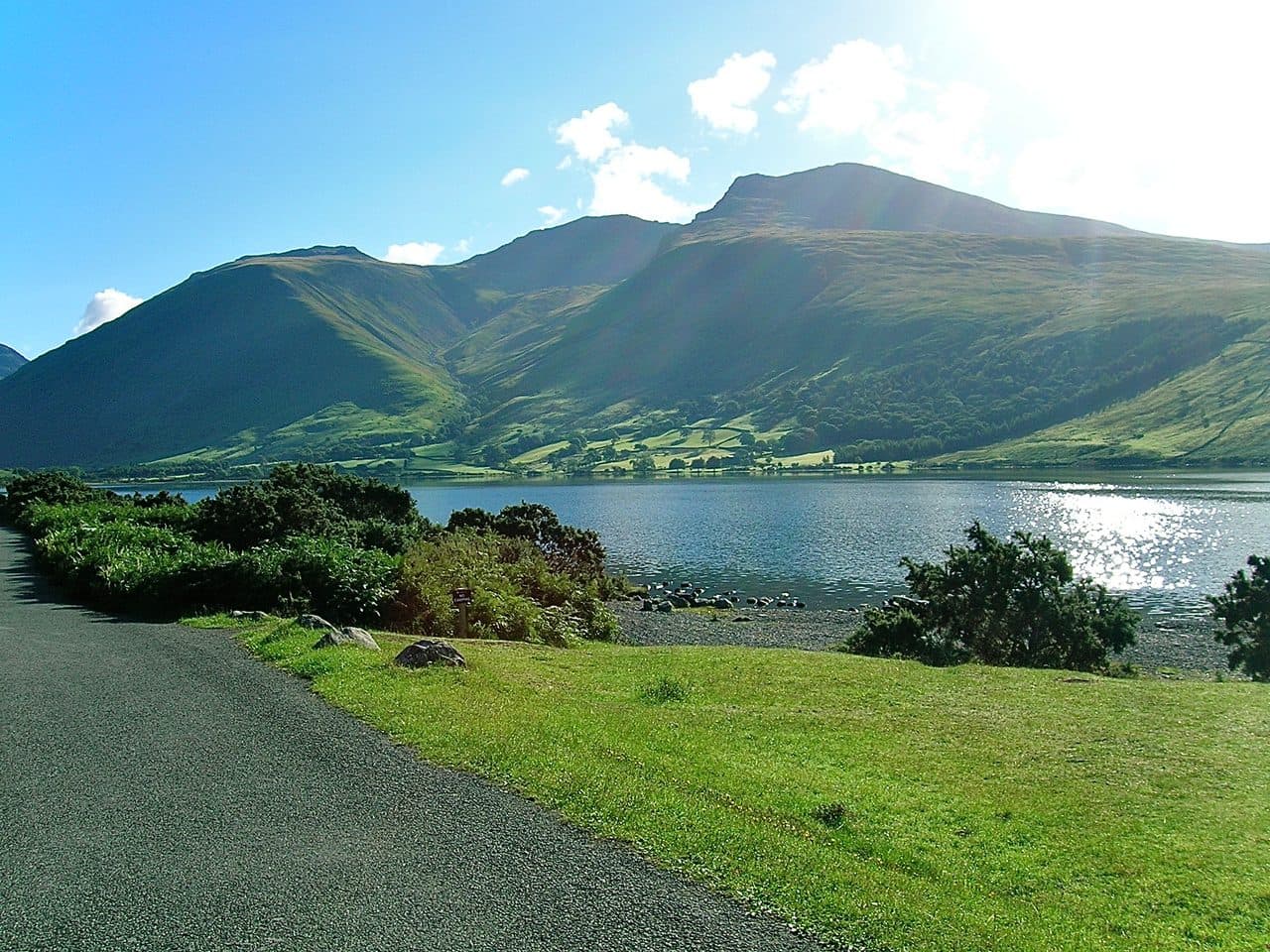
The Wainwrights are the 214 fells of the Lake District that Alfred Wainwright described in his seven Pictorial Guides to the Lakeland Fells. Walking them all is called doing, bagging or completing the Wainwrights. Most people take years, and a lot of them start on Catbells without realising they have begun.
What the Wainwrights are
Wainwright wrote and drew the guides by hand over thirteen years from 1952, and published them between 1955 and 1966. Each book covers one part of the Lake District. Each fell gets its own chapter, with ascents from the valleys, ridge routes to its neighbours and a drawing of the summit. The 214 fells with a chapter make up the list.
The list runs from Castle Crag at 290 metres to Scafell Pike at 978 metres, which is also the highest point in England. Height isn't what earns a fell a place. Wainwright chose them himself, one chapter at a time, so some modest tops are in and some higher lumps are left out. The list is fixed: 214 means the same now as it did in 1966.
The books are still in print from Frances Lincoln. They have been revised twice for changes to paths and walls: by Chris Jesty for the second edition, and by Clive Hutchby for the Walkers Edition, which came out between 2015 and 2020.
The seven books and their areas
The books double as the areas, and plenty of people bag the fells book by book.
- Book One, 1955: The Eastern Fells, 35 fells
- Book Two, 1957: The Far Eastern Fells, 36 fells
- Book Three, 1958: The Central Fells, 27 fells
- Book Four, 1960: The Southern Fells, 30 fells
- Book Five, 1962: The Northern Fells, 24 fells
- Book Six, 1964: The North Western Fells, 29 fells
- Book Seven, 1966: The Western Fells, 33 fells
In brief: the Eastern Fells are the Helvellyn and Fairfield ranges. The Far Eastern Fells run from High Street over to Haweswater and Kentmere. The Central Fells are the lower ground between Borrowdale and Grasmere, with the Langdale Pikes. The Southern Fells hold the Scafells, Bowfell and the Coniston group. The Northern Fells are Skiddaw, Blencathra and the quiet country behind them. The North Western Fells take in Coledale and the fells around Newlands and Buttermere. The Western Fells are Great Gable, Pillar and the long ridges over Wasdale and Ennerdale.
The seven areas
 Central Fells27 fellsHighest: High Raise [Langdale], 762 m
 Southern Fells30 fellsHighest: Scafell Pike, 978 m
 Northern Fells24 fellsHighest: Skiddaw, 931 m
 Eastern Fells35 fellsHighest: Helvellyn, 950 m
 Western Fells33 fellsHighest: Great Gable, 899 m
 Far Eastern Fells36 fellsHighest: High Street, 828 m
 North Western Fells29 fellsHighest: Grasmoor, 852 m
How people plan a round
There is no set order. The usual approaches:
- Base by base. Stay in one town and clear the fells around it before moving on. Keswick, Ambleside, Grasmere, Coniston and Glenridding and Patterdale each put dozens of fells within reach.
- Book by book. Finish the Central Fells, then pick the next book. You can see your progress, and the ridge routes in each book join its fells into good days out.
- Round by round. Horseshoes and ridge walks pick up several fells at once. The Fairfield Horseshoe collects eight, and a Coledale round can take in five to nine.
- A planned list of walks. Published schemes link all 214 into 36 to 59 day walks. See how long it takes to walk the Wainwrights for the numbers.
One piece of advice from people who have finished: pick off the remote and awkward fells when you are nearby, rather than leaving them all to the end. The hardest Wainwrights to bag lists the ones that stall people for years.
Decide early where you want to finish, too. Many people save a short, easy fell so family and friends can be on the summit with them. Castle Crag is the most popular last fell on the LDWA Hillwalkers' Register, chosen by 45 of its 955 completers. On the Wainwright Society's larger register it comes third, after Great End and Haystacks. Where people finish the Wainwrights has the rest of the list.
Where to start
Start with a short, well-pathed fell on a clear day, so you see what the fuss is about. Catbells is the traditional first Wainwright, reached from Keswick by car or by the lake launch. Latrigg, Loughrigg Fell, Binsey, Silver How and Helm Crag are other good first days.
Good first Wainwrights




For a longer list with walking times, see the easiest Wainwrights.
Kit, navigation and weather
The Lake District fells are small by world standards, but the weather on them changes fast. A calm valley can sit under a summit in cloud and a gale. The basics:
- Boots with a grip, waterproof jacket and trousers, a warm layer, hat and gloves, even in summer.
- Food, water, a torch, a whistle and a small first aid kit.
- A paper map and a compass, and the skill to use them. A phone app is a good backup, but batteries die in the cold and signal is patchy in the valleys.
- Tell someone your route and when you expect to be back.
Carry a map and compass on every fell, including the small ones, and check the Mountain Weather Information Service (MWIS) forecast for the Lake District before you go. It gives wind speed and cloud height on the tops, which matter far more than the forecast for the town.
Some routes to popular summits, such as Striding Edge and Sharp Edge, are scrambles. Most summits also have an easier walkers' way up. The scrambles guide covers which routes are which, and the winter guide covers the shorter, colder months.
How to record your progress
Keep a record from the first fell. Fifteen years on, you won't remember the dates. Both registers ask for dates, at least for your first and last fells.
- A paper list. The simplest record. Plenty of walkers pencil a tick and a date into the books themselves, or keep a notebook or a wall map. It is also the one record that never needs charging. Our printable Wainwright checklist has all 214 on three sheets of A4, with a column for the date.
- A spreadsheet or app. Several apps track the 214. Upfell is a free iPhone app that logs each fell with its date and lets you backdate fells you walked before you started using it.
- The registers. When you finish, you can add your name to the Wainwright Society's register and the LDWA Hillwalkers' Register. Neither replaces the other, and neither asks for proof. See how to register your Wainwrights completion.
Walking with other people
A lot of rounds are shared. In the LDWA register, 296 of the 911 entries with a full finish date (32%) share their last fell and date with at least one other completer. If you're planning to walk with someone else, doing the Wainwrights together covers couples, clubs and dogs.
Your pace
There is no wrong pace. Some people finish in two years, and some take sixty. Registers list completers by date, never by speed, and repeat walks don't count against you. A good day on a fell you've already bagged is still a good day.